Why Many Profitable Philippine SMEs Still Run Out of Cash
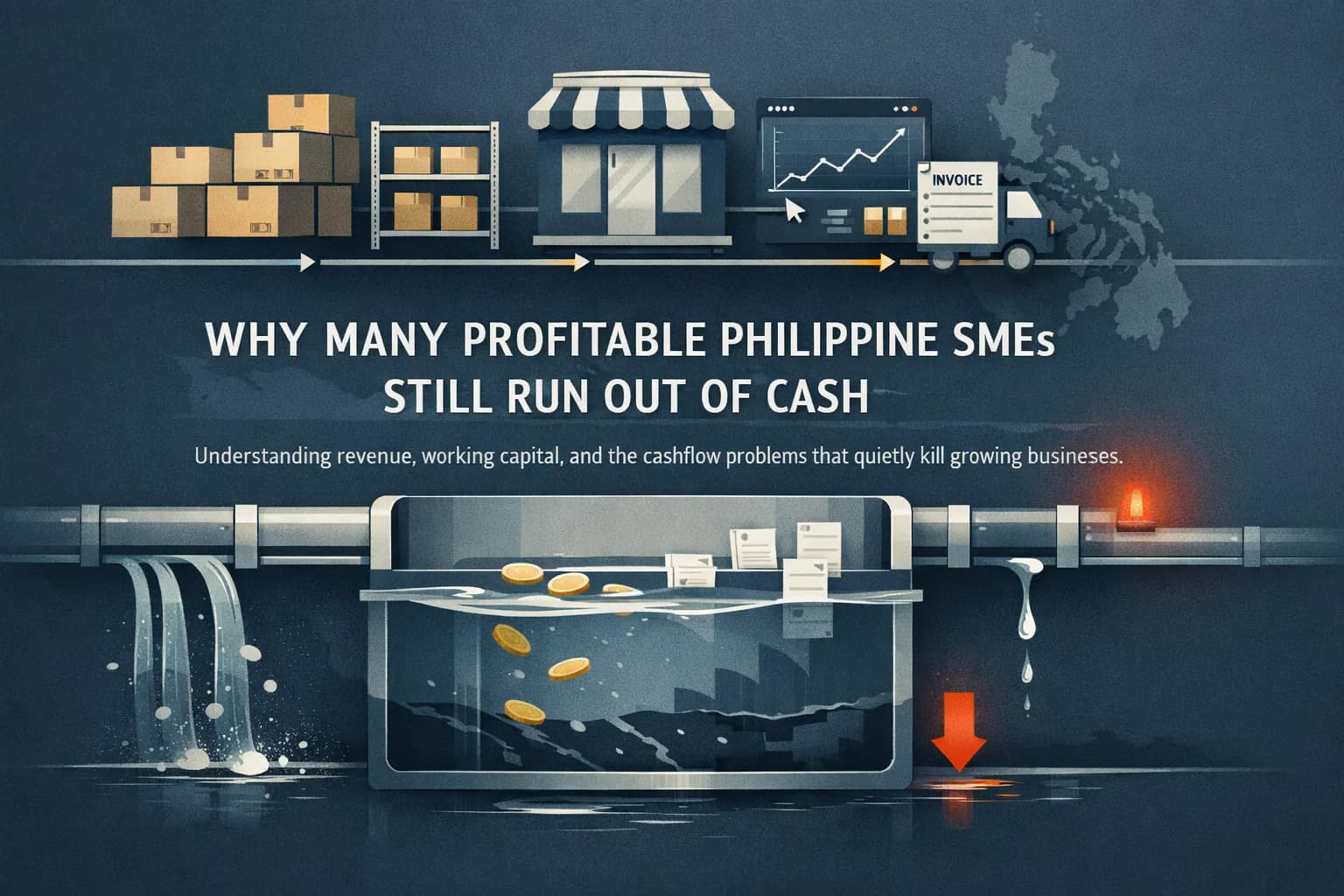
Understanding Revenue, Working Capital, and the Cashflow Problems That Quietly Kill Growing Businesses
Many small and medium-sized businesses in the Philippines appear healthy on the surface. Sales are growing. Orders are coming in. Financial statements show profit.
Yet many of these businesses eventually stall or collapse — not because demand disappears, but because they run out of cash.
This is a common problem among growing SMEs. According to the Bangko Sentral ng Pilipinas, micro, small, and medium enterprises make up about 99.5% of businesses in the country and employ around 63% of the workforce. BSP — National Strategy for Financial Inclusion
Despite their economic importance, many SMEs operate with informal financial systems and irregular cash cycles, making liquidity management difficult. BusinessWorld — MSME lending and financial challenges
Globally, research often shows that poor cashflow management contributes to roughly 82% of small business failures. Preferred CFO — Small Business Cashflow Failure Statistics
The core issue is simple but widely misunderstood:
Revenue does not equal cash.
And when businesses scale without understanding this distinction, financial stress quickly follows.
Revenue vs Cash: A Critical Distinction
Many entrepreneurs track revenue closely but rarely monitor actual operating cash.
These two numbers are not the same.
Sales Revenue
Revenue reflects the value of goods or services sold.
However, revenue is recorded when a sale occurs — not necessarily when the money arrives.
Example:
A distributor invoices ₱1,000,000 worth of products to retailers on 60-day payment terms.
On paper, the company generated ₱1M in revenue.
But the cash may not arrive for two months.
Recorded Profit
Profit is calculated after deducting expenses from revenue.
However, profit can include non-cash accounting entries, such as depreciation, inventory adjustments, or unpaid invoices.
A company may show ₱2M in profit for the quarter while having very little cash in the bank.
Available Operating Cash
Cash available for operations includes:
- Bank balances
- Incoming collections
- Short-term liquidity
This is what actually pays for:
- salaries
- rent
- suppliers
- logistics
- marketing
- taxes
If cash outflows arrive before inflows, even profitable businesses can face serious financial stress.
As experienced operators often discover, growth itself can create liquidity problems if working capital is not managed carefully.
Understanding Working Capital Cycles
Product-based businesses operate on a working capital cycle, sometimes called the cash conversion cycle.
This cycle determines how long cash stays tied up inside the business before returning as revenue.
The typical cycle looks like this:
- Purchase inventory from suppliers
- Hold inventory in storage or warehouses
- Sell products to customers
- Wait for customer payments
- Collect cash
The problem is timing.
Cash usually leaves the business long before it returns.
Example for an importer:
| Stage | Typical Timing |
|---|---|
| Supplier payment | Day 0 |
| Shipping and customs | 30–45 days |
| Warehouse storage | 15–30 days |
| Retail sales | 15–45 days |
| Customer payment terms | 30–60 days |
In many cases, businesses wait 90–150 days before recovering their cash.
During that period, the company must still pay salaries, logistics costs, and operating expenses.
The longer the cycle, the more cash the business needs to survive.
Inventory: The Hidden Cash Trap
Inventory is often the largest working capital drain in product-based businesses.
Every unit sitting in a warehouse represents cash that cannot be used elsewhere.
Banks frequently point out that poor inventory control can significantly weaken SME liquidity because excess stock ties up working capital that could otherwise fund operations or growth. Bank of the Philippine Islands — Inventory and SME Cashflow
Several operational mistakes create this problem.
Overstocking
Businesses often overestimate demand.
Large purchase orders may reduce supplier prices but increase inventory risk.
When stock moves slower than expected, cash becomes locked in unsold goods.
Slow-Moving Products
Some items may take months or years to sell.
These products still consume:
- storage space
- insurance
- capital
Yet they produce no immediate cash return.
Expanding Product Catalogs Too Quickly
Many growing brands add new SKUs aggressively.
However, every new product requires:
- minimum order quantities
- safety stock
- marketing investment
The result is often inventory growth faster than revenue growth, which squeezes cashflow. Without structured demand forecasting, businesses have no reliable way to determine which new products warrant the inventory investment.
Supplier Credit Terms and Liquidity
Supplier payment structures significantly influence working capital.
For many Philippine importers and distributors, inventory must be paid for before products are sold.
Common supplier arrangements include:
Full Upfront Payment
Payment required before production or shipping.
This structure places the entire financing burden on the buyer.
Partial Deposits
Typical structure:
- 30%–50% deposit
- balance upon shipment or delivery
This reduces the upfront cash requirement.
Credit Terms
Some suppliers offer Net 30, Net 60, or Net 90 payment terms.
Extending payment schedules can materially improve working capital. Research suggests that adding 30 days to supplier terms can increase available working capital by around 8%. Phoenix Strategy Group — Payment Terms and Working Capital
Experienced operators often treat supplier negotiation as a financial strategy, not just a purchasing discussion.
Customer Payment Terms
Customer payment delays can create the opposite pressure.
Many SMEs sell to:
- retailers
- distributors
- corporate clients
- government agencies
These customers often pay on 30–90 day terms.
While waiting for payment, the SME must still fund:
- inventory purchases
- logistics
- salaries
- rent
This effectively turns the supplier into an unpaid lender to the customer.
Delayed receivables are one of the most common causes of SME liquidity problems.
Businesses that rely heavily on a few large buyers are especially vulnerable.
Simple Cashflow Systems SMEs Can Implement
Managing cashflow does not require complex financial systems.
Many SMEs dramatically improve stability using simple operational tools.
Weekly Cashflow Monitoring
A simple weekly cash report should track:
- current bank balance
- receivables expected this week
- upcoming payments
- payroll obligations
- supplier payments
Even a basic spreadsheet can provide valuable visibility.
Short-Term Cash Forecasts
A rolling 4–12 week forecast helps owners anticipate shortages.
This allows management to:
- delay non-essential purchases
- negotiate payment extensions
- arrange short-term financing
before cash becomes critical.
Working Capital Dashboards
SMEs benefit from tracking three core metrics:
| Metric | What It Shows |
|---|---|
| Inventory days | how long products sit before selling |
| Receivable days | how long customers take to pay |
| Payable days | how long suppliers allow payment |
Small improvements in these metrics can release large amounts of cash.
Operational Lessons from Real Businesses
As businesses grow, many founders eventually discover that cashflow discipline becomes a core operational skill.
Several patterns appear repeatedly in successful companies.
Sales Growth Can Hide Financial Stress
A business may double revenue while experiencing increasing liquidity pressure.
Inventory purchases, production runs, and staffing expansions often happen before revenue is collected.
Without careful planning, growth can actually accelerate cash shortages.
Inventory Efficiency Matters More Than Many Realize
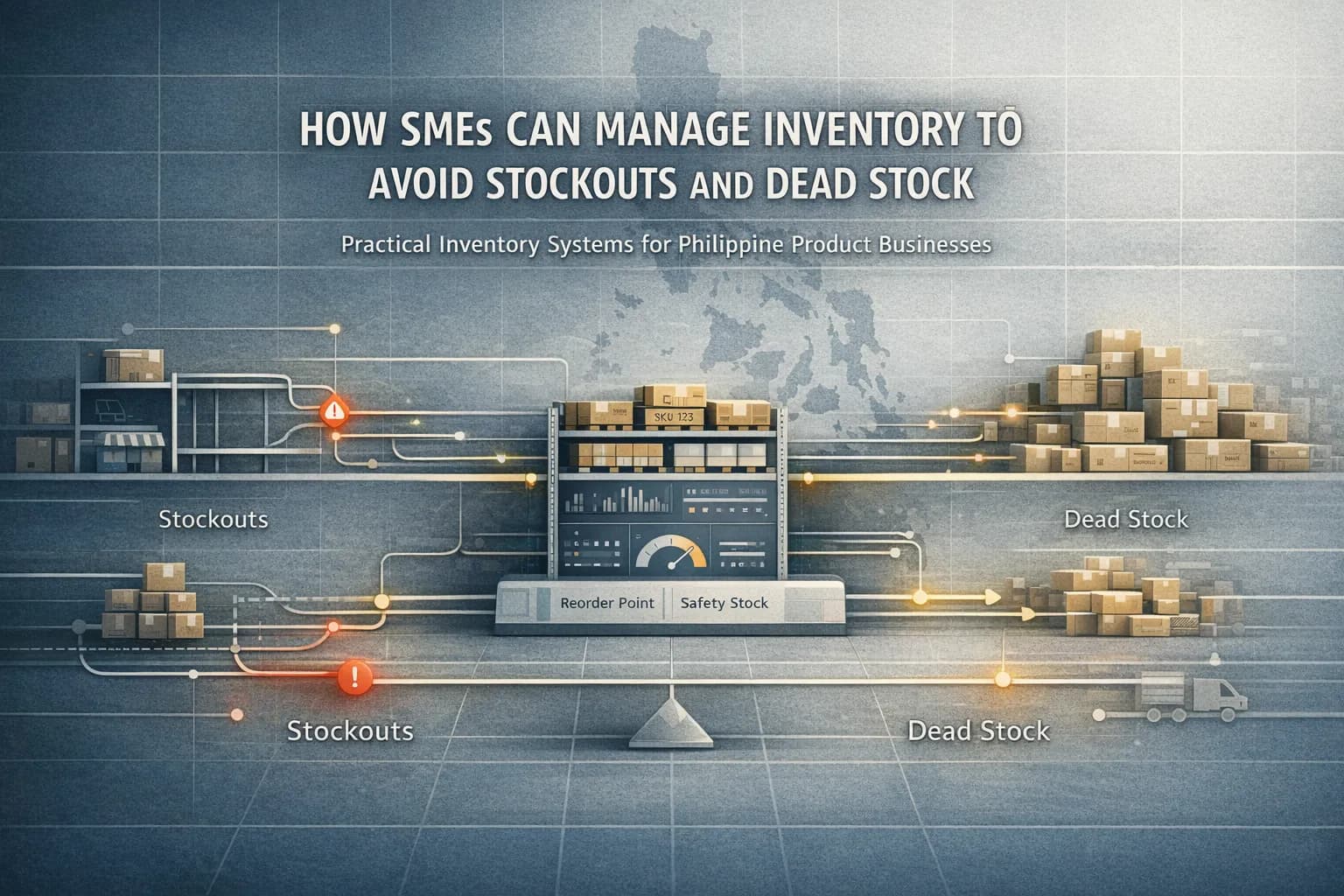
Companies that optimize inventory turnover often unlock significant working capital. Our guide on managing inventory to avoid stockouts and dead stock covers the metrics and frameworks that drive this improvement.
Reducing excess stock can release cash that can be reinvested into:
- marketing
- expansion
- product development
Procurement Strategy Affects Finance
Negotiating better supplier terms or restructuring purchasing schedules often improves liquidity faster than raising capital.
For trading companies and distributors, procurement economics and finance are closely connected.
Systems Create Visibility
Operational businesses eventually develop systems that link:
- sales data
- inventory levels
- receivables
- supplier payments
This integration allows managers to see cash pressure early and make adjustments before problems escalate.
Tools That Help SMEs Manage Cashflow
Today, several types of tools help SMEs manage liquidity more effectively.
Cashflow Monitoring Tools
Modern accounting platforms allow real-time tracking of financial health. Luxium's Cashflow App is designed specifically for SMEs that need visibility into receivables, payables, and working capital without enterprise-level complexity. Key metrics to track include:
- receivables
- payables
- bank balances
- projected cashflow
Financial Dashboards
Operational dashboards can combine sales, inventory, and finance data to show:
- working capital exposure
- upcoming liquidity pressure
- operational cash requirements
SME Financing Platforms
Fintech lenders and invoice financing platforms now provide alternatives to traditional bank credit for short-term working capital needs.
When used responsibly, these tools can smooth seasonal or operational cash gaps.
Conclusion
Many SME failures are not caused by weak sales.
They are caused by poor cashflow management.
Growing businesses often underestimate how much cash becomes trapped in:
- inventory
- receivables
- supply chains
- operational cycles
Understanding the difference between revenue and liquidity is one of the most important financial lessons for entrepreneurs.
Businesses that succeed long-term typically adopt a few consistent habits:
- monitoring cash weekly
- controlling inventory growth
- negotiating smarter supplier terms
- managing receivables actively
- implementing simple financial visibility systems
Cashflow discipline rarely attracts attention during periods of strong growth.
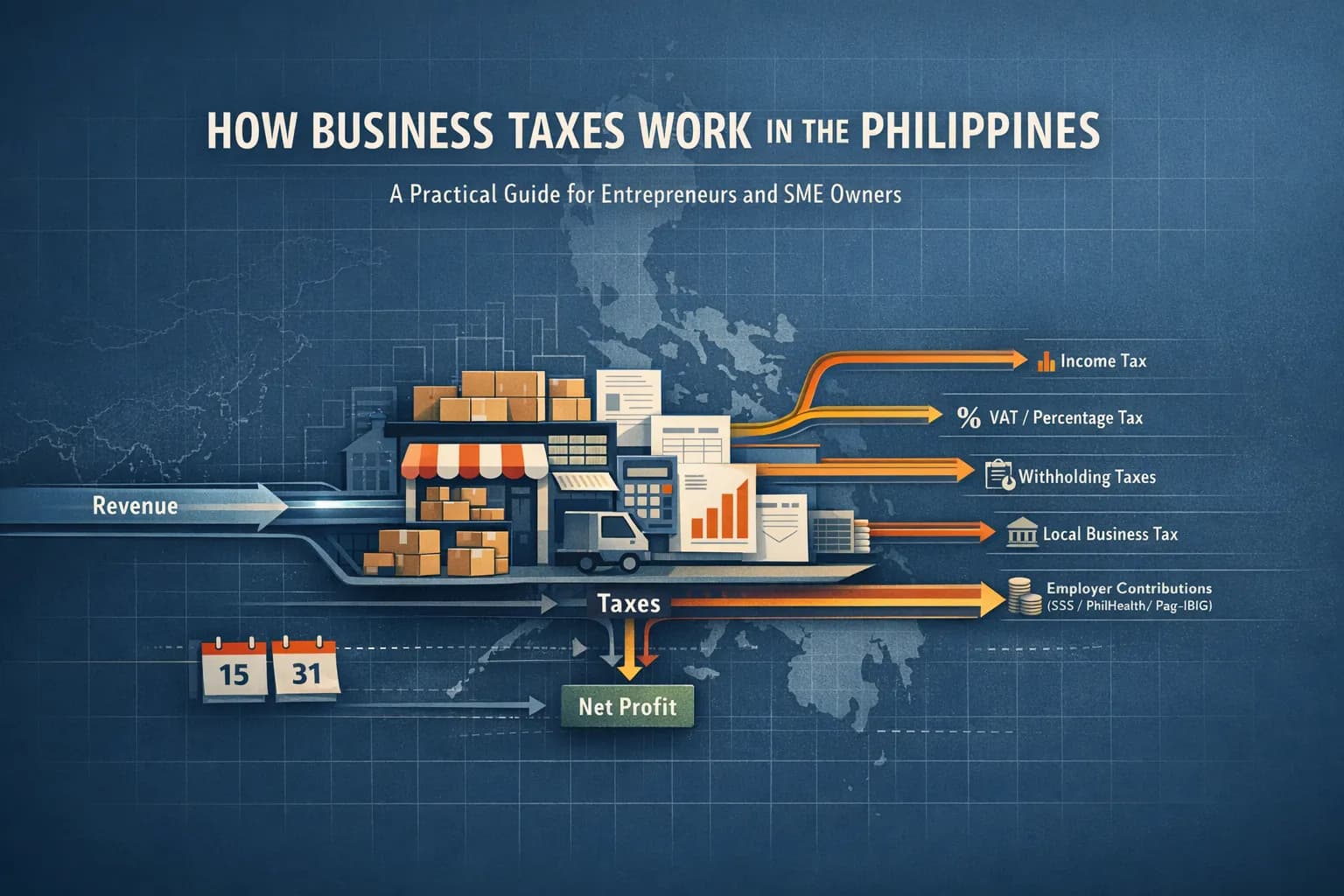
But when economic conditions tighten or expansion accelerates, it becomes the difference between businesses that scale — and those that quietly run out of cash. Understanding how Philippine business taxes work is another critical piece of financial planning that many founders overlook until it creates a cash crunch.