Why Growing Product Catalogs Break SME Operations Without Demand Forecasting
The problem nobody warns you about
Philippine SMEs are usually built on speed. You find a product that sells, you figure out a supplier, you move fast. In the early stage, that instinct is your greatest asset. You do not need a demand forecast when you carry ten products and you know every item by name.
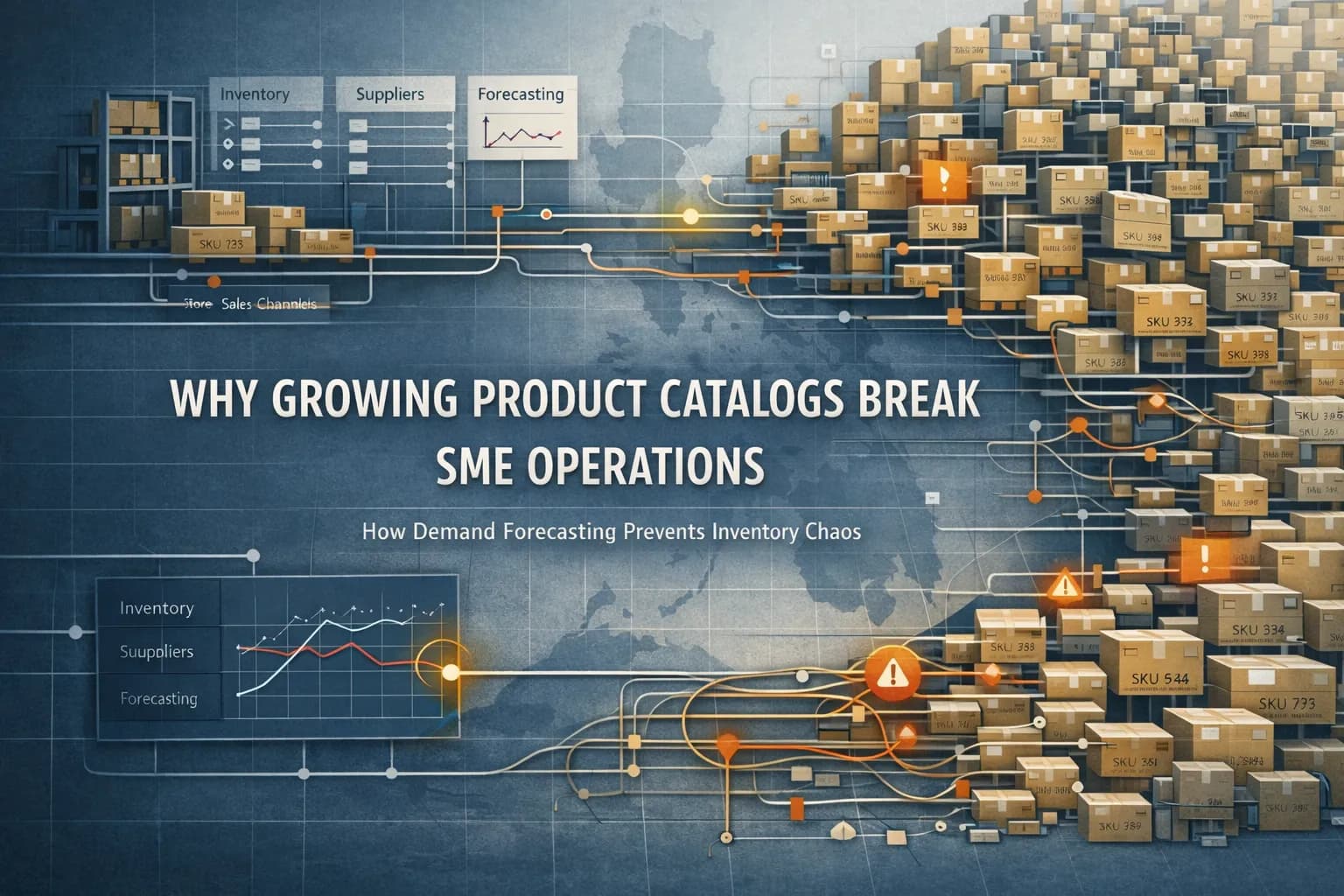
But catalogs grow. A distributor adds categories. An importer picks up new brands. A retailer expands price points. Suddenly you are managing 80 SKUs, then 150, then 300 — and the spreadsheet that used to feel manageable starts lying to you. Numbers do not match the warehouse. You reorder the wrong quantities. Fast movers run out while slow movers collect dust.
This is not a failure of effort. It is a structural problem: the business outgrew the system that ran it.
And it happens quietly. Revenue can keep climbing even as inventory accuracy degrades, purchasing becomes chaotic, and cash gets tied up in stock that is not moving. By the time the pain is obvious, months of compounding operational debt have already accumulated.
This article is about that specific failure mode — how the absence of demand forecasting turns growing product catalogs into operational liabilities, and what structured planning actually looks like for SMEs that want to scale without the chaos.
Why most SMEs never build forecasting systems
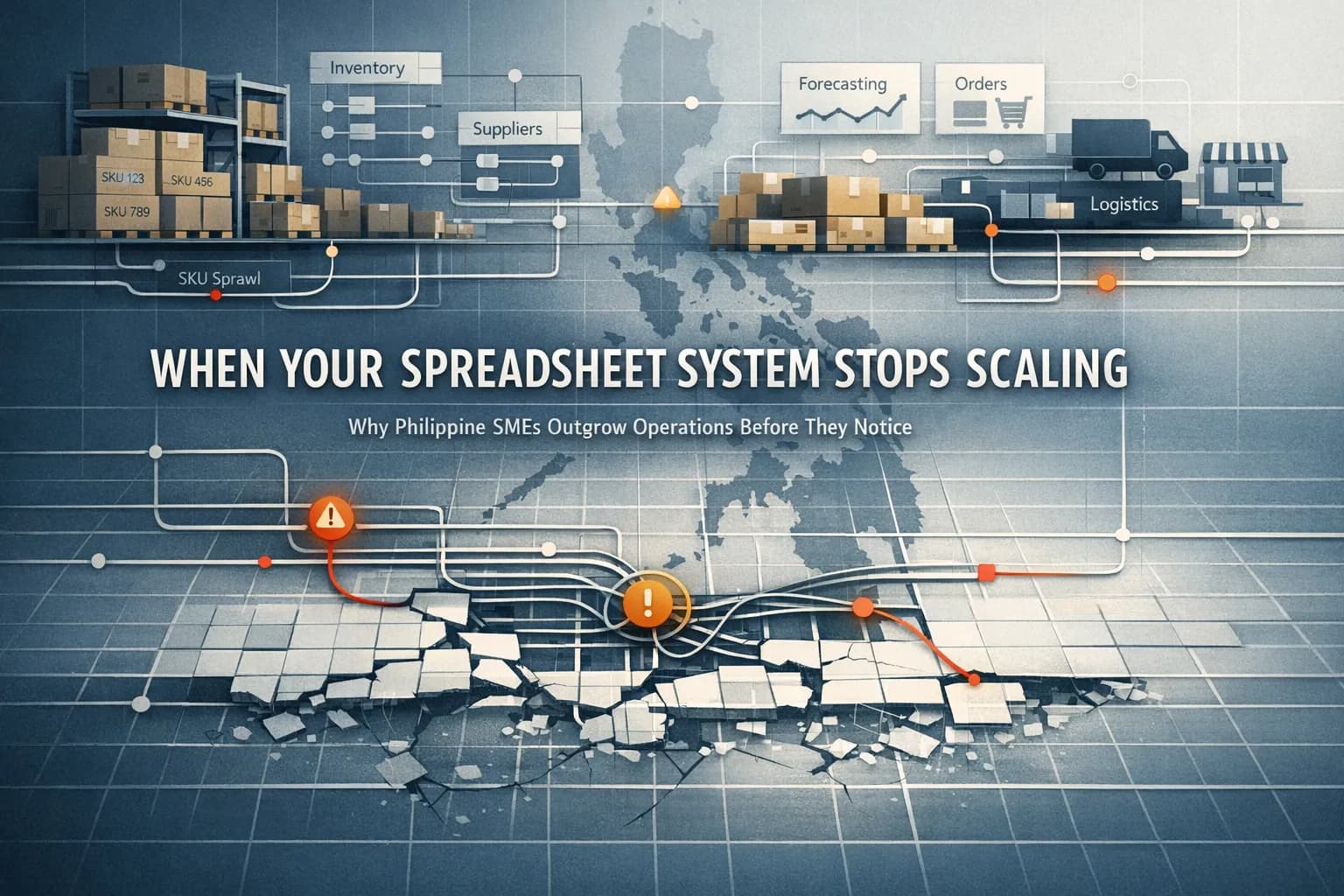
The spreadsheet ceiling
Almost every product-based SME starts with spreadsheets. They are free, familiar, and flexible enough for a small operation. The problem is not that spreadsheets are bad tools. The problem is that founders often do not realize when they have outgrown them.
Supply chain analysts at Turvo point out that spreadsheet-based inventory management requires extensive manual input and becomes extremely difficult to scale. And a recent Aetos DigiLog survey suggests that nearly 80% of small businesses still rely on spreadsheets or manual inventory tracking — often because more advanced systems feel expensive or intimidating.
That statistic is not surprising. What is surprising is how long businesses can operate this way before the cracks show. You can brute-force inventory accuracy for a long time if you are willing to count stock on weekends and chase discrepancies through chat threads. But that is operational debt, not operational discipline. And the interest rate on that debt rises with every new SKU.
Purchasing by instinct
Without a forecasting framework, procurement becomes reactive. You order when stock looks low. You reorder whatever sold well last month. You rush a purchase order because a customer asked for something you ran out of.
This creates a pattern that feels busy but is structurally fragile:
- Emergency restocking becomes routine
- Purchase quantities are inconsistent
- Supplier orders get rushed or delayed
- Inventory cycles become unpredictable
For businesses that import or work with suppliers overseas, this is especially dangerous. International lead times punish reactive purchasing. A two-week delay on a restock that should have been planned a month ago can mean lost sales during your busiest season.
Forecasting is not something most founders learned
Here is an uncomfortable truth: most entrepreneurs were never trained in demand forecasting. It is taught in operations management and supply chain programs, not in the marketing courses or entrepreneurship workshops where many founders start.
So the default approach is intuition. And intuition works when you know every product personally and your order volumes are small. It stops working once the catalog grows beyond what one person can hold in their head.
Research on SME inventory management consistently identifies poor demand forecasting and weak inventory planning systems as major operational challenges. This is not because founders are careless. It is because the skill was never part of their toolkit.
What happens when catalogs grow without forecasting
SKU proliferation kills visibility
Every new SKU you add is not just another product on a shelf. It is a new set of variables: sales velocity, supplier lead time, reorder quantity, storage requirements, demand variability. At 20 SKUs, you can track most of this in your head. At 200, you cannot.
Maropost's analysis of catalog complexity highlights that large product catalogs create fundamentally different operational challenges compared to small ones. The systems and workflows that work at small scale simply do not transfer.
Without structured forecasting, basic questions become surprisingly hard to answer:
- Which products are actually driving revenue?
- Which SKUs have been sitting for 90 days?
- Which items need to be reordered this week?
If answering those questions requires opening three spreadsheets and cross-referencing a chat thread, your visibility system is already broken.
SKU-level forecasting gets noisy fast
Even if you try to forecast, accuracy drops as SKU count rises. Research from Bain & Company found that SKU-level forecasts can be up to four times less accurate than category-level forecasts, particularly in product lines with high SKU counts.
This matters because most SMEs that attempt forecasting try to do it product by product. That approach becomes unreliable quickly. The better method — forecasting at the category level first and then allocating down to individual SKUs — is something most small businesses never learn.
The operational damage
When forecasting is missing, the consequences are predictable. They are also expensive.
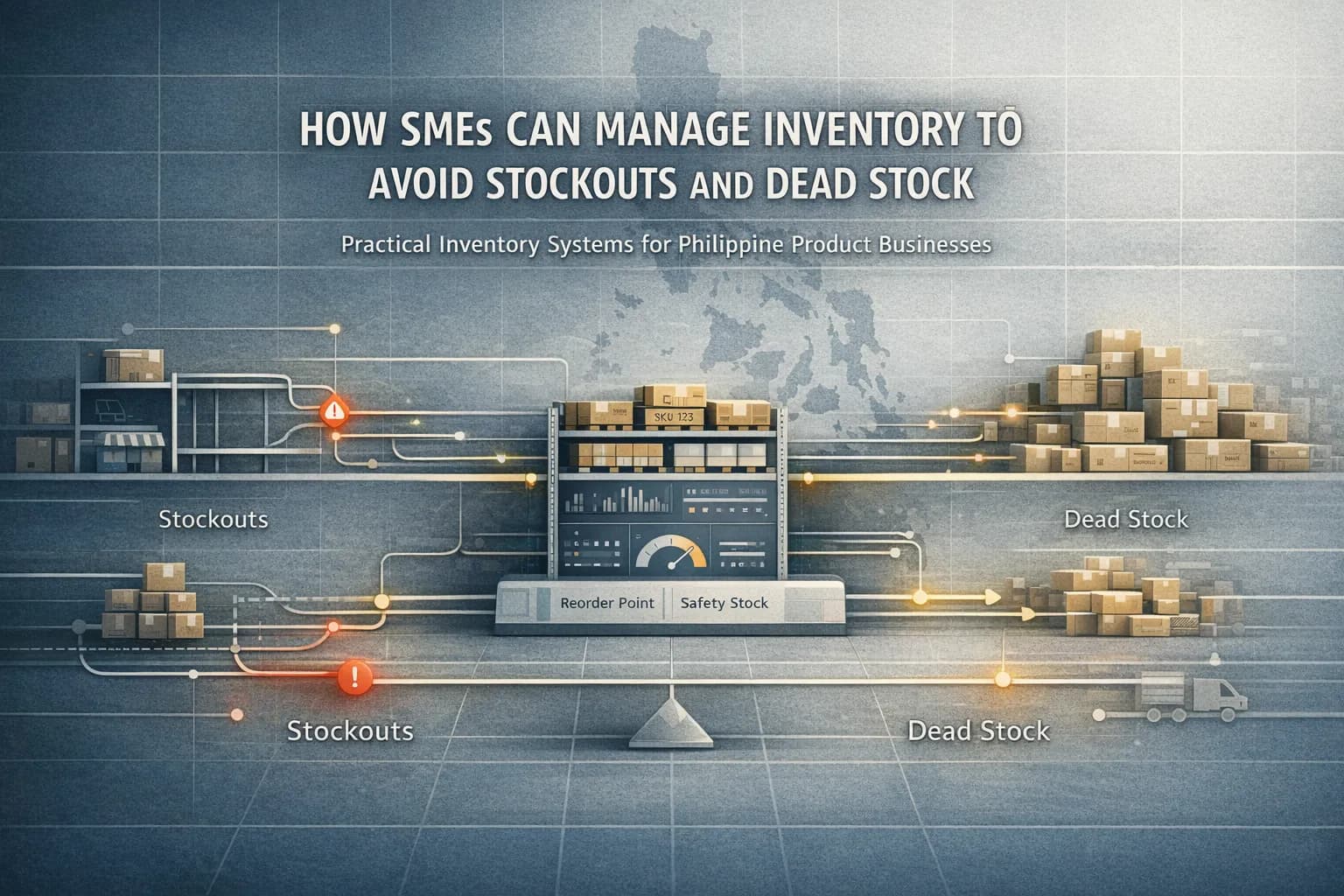
Stockouts on your best products
The most painful version of this problem is running out of the products your customers actually want. Demand spikes during promotions, holidays, or payday cycles can deplete inventory faster than expected. Ninja Van Philippines notes that retail demand surges during events and promotions frequently create inventory gaps when businesses fail to anticipate demand.
Stockouts do not just cost you one sale. They cost you the customer's trust. A buyer who finds your product unavailable once might come back. A buyer who finds it unavailable twice probably will not.
Overstocking drains your cash
Here is the irony: many businesses try to solve stockout risk by ordering more of everything. This creates the opposite problem — excess inventory that ties up working capital and increases storage costs.
Paro's analysis of forecasting accuracy highlights that inaccurate forecasting frequently results in both overstocking and stockouts, and both damage profitability and cash flow.
The cash locked in slow-moving inventory is cash you cannot spend on fast-moving products, marketing, or operations. For SMEs with limited working capital, this can quietly strangle growth — a dynamic we explored in depth in why profitable Philippine SMEs still run out of cash.
Chaotic purchasing cycles
Without forecasting, some months involve aggressive purchasing and others involve delayed orders. This inconsistency disrupts supplier coordination and leads to:
- Rushed freight costs that eat into margins
- Partial shipments that complicate receiving
- Fragmented logistics planning
The team ends up spending more time putting out inventory fires than actually improving the business. That is the real cost — not just the money, but the operational attention that gets consumed by problems that structured planning would have prevented.
Patterns from real operations
If you have run a growing product business long enough, these patterns probably sound familiar.
Visibility breaks first. You lose track of incoming shipments, product transfers between locations, and what is actually available versus what is committed to orders. The spreadsheet says 50 units. The warehouse has 37. Nobody can explain the difference without spending an hour investigating.
Intuition stops scaling. The instincts that helped you buy well when you carried 30 products become unreliable at 150. You start over-ordering products you feel good about and under-ordering ones you should be watching more closely.
Teams spend their time reconciling instead of operating. Staff end up manually verifying inventory numbers across spreadsheets, warehouse counts, and marketplace dashboards. That reconciliation work is not productive — it is a symptom of systems that cannot keep up.
These inefficiencies rarely appear overnight. They accumulate slowly, like sediment. By the time the operational friction is obvious, months of compounding problems are already baked into the inventory.
What structured demand forecasting actually looks like
Forecasting does not require advanced AI or enterprise software. Many SMEs can implement structured demand planning with relatively simple methods. The key is consistency, not complexity.
Track sales at the SKU level
This is the foundation. You cannot forecast demand for products you are not tracking consistently. Even basic sales histories — weekly or monthly units sold per SKU — allow teams to identify trends, seasonality, and velocity differences across products.
Use historical demand analysis
Simple forecasting models like moving averages or basic trend analysis can reveal:
- Seasonal demand patterns
- Product growth or decline trends
- The impact of promotions or events on specific categories
Paro recommends time-series forecasting models for SMBs because they are effective without requiring complex tools or dedicated analysts.
Forecast at the category level first
Because SKU-level forecasts get noisy, start with category-level demand estimates and then allocate across individual products. This approach reduces forecasting error and simplifies planning. It is also closer to how purchasing decisions actually get made — you usually decide how much to spend on a category before you decide which specific products to order.
Build structured reorder rules
Fast-moving items and slow-moving items should not be managed the same way. Structured reorder frameworks include:
- Reorder point systems that trigger purchasing at defined stock thresholds
- Safety stock buffers calibrated to lead time and demand variability
- ABC classification that segments inventory by revenue contribution
These frameworks replace guesswork with rules. They do not need to be perfect — they just need to be better than intuition.
How forecasting connects to the rest of the supply chain
Demand forecasting is not just an inventory exercise. It is the foundation that makes procurement, logistics, and supplier coordination actually work.
Procurement planning
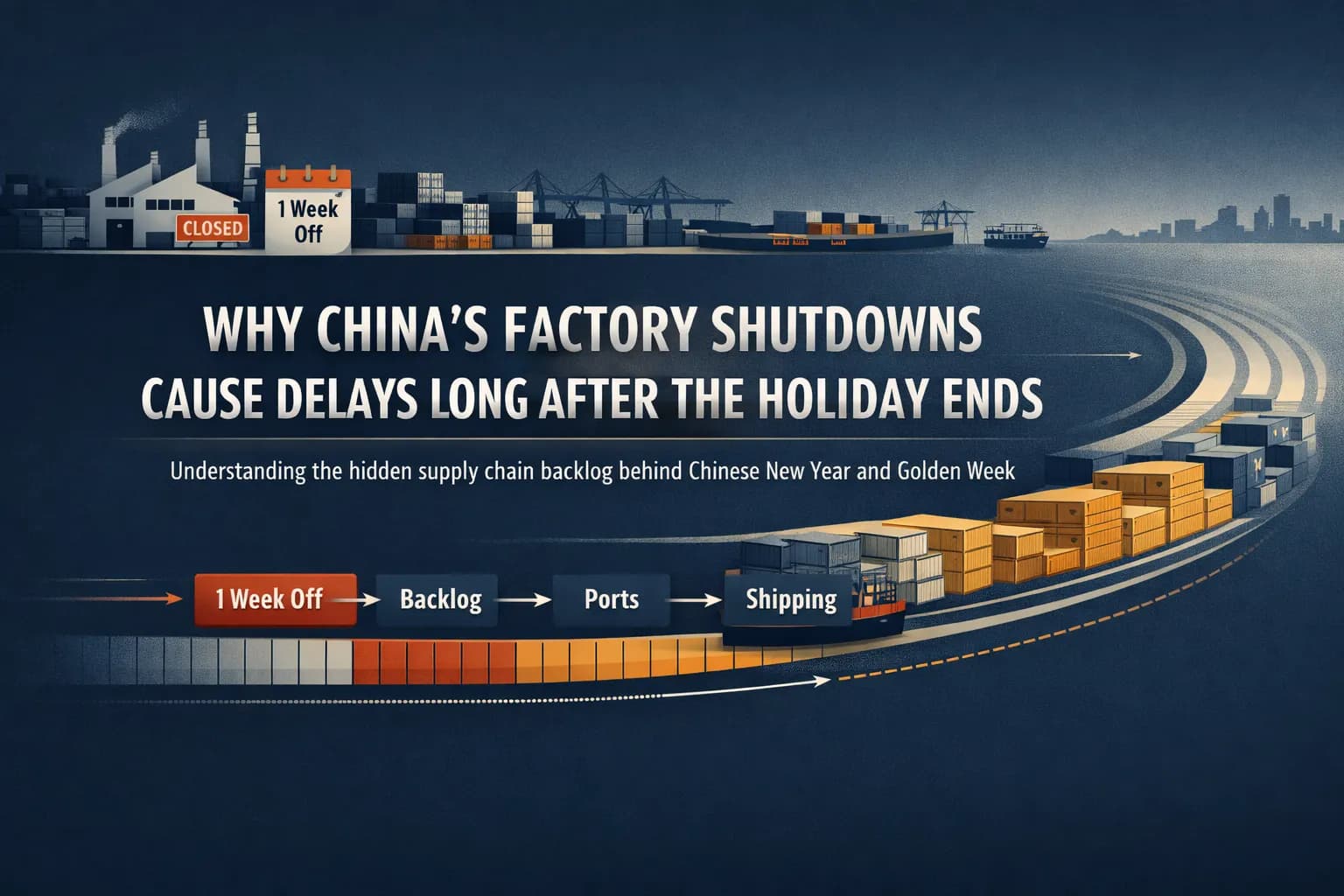
Forecasts allow you to place supplier orders earlier and more consistently. Instead of emergency purchase orders, procurement follows a predictable cadence. This is especially important for businesses that import from China, where factory shutdowns can cause weeks of cumulative delay. Reliable forecasting improves supplier relationships and reduces the premium you pay for rushed orders.
Supplier coordination
Suppliers plan production more effectively when they receive projected demand. Sharing forecasts — even rough ones — reduces lead time uncertainty and helps suppliers allocate capacity for your orders.
Logistics scheduling
Inbound Logistics highlights that reliable forecasting helps optimize supply chain scheduling and inventory planning, reducing both stockouts and excess inventory. When you know what you need and when you need it, you can consolidate shipments, negotiate better freight rates, and avoid expedited shipping costs.
Inventory optimization
Over time, structured forecasting improves:
- Cash flow — less capital locked in slow-moving stock
- Product availability — fewer stockouts on key items
- Operational stability — less firefighting, more planning
Learning resources for SME operators
For founders and operators who want to build stronger supply chain and forecasting capabilities, several structured courses provide excellent foundations.
Supply Chain Management Specialization — Rutgers University (Coursera)
Covers demand forecasting, procurement planning, logistics strategy, and inventory management. A solid end-to-end introduction. Course link
Introduction to Operations Management — Wharton School (Coursera)
Explores operational frameworks including capacity planning, process improvement, and inventory management. Useful for founders who want to understand operations at a systems level. Course link
Supply Chain Planning — UC Irvine (Coursera)
Focuses specifically on matching supply with demand through structured forecasting and replenishment planning. Directly relevant to the problems discussed in this article. Course link
Supply Chain Analytics Specialization (Coursera)
Teaches data-driven forecasting and inventory optimization using analytics tools. Best suited for operators ready to move beyond spreadsheets. Course link
Conclusion
Most SMEs delay demand forecasting because early growth does not seem to require it. The business is small enough to manage by feel. Products are few enough to track manually. Suppliers are close enough to call when you need something.
But catalogs grow. SKU counts climb. Channels multiply. And the absence of forecasting quietly becomes the ceiling on the business.
The companies that scale well are rarely the ones that simply sell more. They are the ones that build the planning systems early enough to handle what selling more actually does to operations.
Forecasting is not a corporate luxury. It is the difference between growing with control and growing into chaos. Luxium's procurement services help businesses build the supplier coordination and purchasing rhythms that make structured forecasting actionable.
Sources
- Turvo — Inventory management systems for SMEs
- Aetos DigiLog — SME inventory management adoption gap
- Bain & Company — The complexity of managing product complexity
- Ninja Van Philippines — Preventing inventory stockouts
- Paro — Demand forecasting for SMBs
- Inbound Logistics — Supply chain forecasting methods
- ResearchGate — SME inventory management challenges study
- Maropost — Managing complex product catalogs