Why China's Factory Shutdowns Cause Delays Long After the Holiday Ends
Introduction
If you source products from China, you already know the calendar. Chinese New Year in January or February. Golden Week in October. Official holidays, a few days off, business as usual afterward.
Except it is never that simple.
What catches many importers off guard—especially those still building their procurement muscle—is not the shutdown itself. It is how far the disruption reaches beyond the holiday dates. In practice, China's largest factory shutdown periods can trigger four to eight weeks of production and logistics disruption due to factory closures, labor migration, production backlogs, and shipping congestion that compound on top of each other.
For businesses in the Philippines that rely on Chinese manufacturing for inventory, components, or finished goods, understanding how these shutdown cycles ripple through the entire supply chain—from raw material suppliers to ports—is not optional. It is the difference between a smooth Q1 and a quarter spent apologizing to customers.
Understanding China's Major Factory Shutdown Periods
Chinese New Year (Spring Festival)
Chinese New Year is the single most significant annual disruption to China's manufacturing sector. The holiday typically falls between late January and mid-February, and although the official national holiday lasts about 7 days, the actual industrial slowdown extends well beyond that.
Factories typically stop production two to three weeks before the holiday as migrant workers begin returning to their hometowns across the country. After the holiday, many facilities need another one to two weeks to restart operations, bring workers back, and stabilize output.
The reason is structural: China experiences the world's largest annual human migration during this period—often called "Chunyun." In peak years, this travel wave has exceeded 3 billion passenger trips, according to China's Ministry of Transport.
Golden Week
Golden Week occurs around October 1st each year, marking China's National Day.
Compared to Chinese New Year, Golden Week is shorter but still disruptive—typically creating a 7–10 day shutdown across factories, ports, and government offices.
The timing makes it particularly inconvenient. Because production schedules are already compressed heading into the fourth-quarter holiday season, Golden Week frequently creates production queues and export delays that cascade into November and December fulfillment windows.
Why Production Stops Almost Completely
Many first-time importers assume factories operate with skeleton crews during holidays. In most cases, production stops entirely. Here is why.
Massive Labor Migration
China's manufacturing workforce depends heavily on migrant labor. Millions of workers travel hundreds or thousands of kilometers home during Chinese New Year—and not all of them come back.
Labor turnover after Chinese New Year can reach 10–20% in certain manufacturing sectors, according to manufacturing surveys cited by global logistics firms like DHL Supply Chain. That means factories do not just restart—they also have to recruit and retrain before production returns to normal capacity.
Supplier Network Shutdown
Manufacturing rarely happens in isolation. A typical export product may depend on dozens of upstream suppliers providing components, packaging, electronics, plastics, or raw materials.
If even one critical supplier shuts down, the entire production line stalls.
During Chinese New Year, entire supplier ecosystems pause simultaneously, creating a cascading halt that can affect multiple industries at once.
Logistics and Administrative Closures
Manufacturing is only one link in the export chain. During major holidays, several supporting services also slow down or stop entirely:
- Freight forwarders
- Customs offices
- Trucking companies
- Warehouses
- Port logistics staff
Without these services running, shipments cannot move—even if finished goods are sitting on a factory floor ready to go.
The Post-Holiday Production Backlog
Even after factories reopen, production rarely resumes smoothly. Instead, a significant backlog forms—and working through it takes time.
Order Queues Before the Holiday
In the months leading up to Chinese New Year, buyers rush to place orders before factories shut down. This is rational behavior, but it creates a problem: large pre-holiday order queues that often push lead times from the typical 20–30 days to 45–60 days or more.
Once factories reopen, they must first complete orders that were already in the pipeline before the shutdown. New orders placed during or just after the holiday go to the back of the line.
Priority Given to Large Buyers
Factories often prioritize long-term or high-volume clients when they restart. For smaller buyers, newer importers, or businesses without established supplier relationships, this can mean additional weeks of delay before production even begins.
This is one of the less obvious advantages of building strong, ongoing supplier relationships. Priority access after shutdown periods is worth real money.
Production Ramp-Up Takes Time
Even when workers return quickly, factories rarely hit full output on day one.
Production lines need to be restarted, supply chains across sub-suppliers must stabilize, and worker productivity typically takes one to two weeks to normalize. The first batches off a newly restarted line may also face higher defect rates, adding quality-control time to the schedule.
Shipping and Logistics Congestion After Reopening
Manufacturing delays are only half the story. What happens at the ports afterward can extend disruptions even further.
Container Shortages
After major holidays, thousands of exporters attempt to ship goods at the same time.
This sudden surge in export demand can cause temporary container shortages, especially when combined with seasonal shipping peaks. Global freight platforms like Freightos frequently report post-holiday container imbalances as shipments surge out of Chinese ports.
Port Congestion
China's ports are among the busiest in the world. When factories restart production simultaneously, container volumes spike quickly and create temporary port congestion and vessel scheduling delays, particularly in major export hubs such as:
- Shanghai
- Shenzhen
- Ningbo
- Guangzhou
Even short disruptions at these ports can ripple through international shipping schedules for several weeks, according to global shipping analytics from Alphaliner.
Freight Rate Volatility
Demand spikes after holidays regularly push freight rates higher, particularly during peak export months.
This is worth factoring into landed cost calculations. If you are shipping during a post-holiday surge, your freight costs may be meaningfully higher than what you budgeted based on mid-year rates.
Realistic Delay Timelines Importers Should Expect
Understanding the full disruption timeline helps set realistic expectations—both internally and with customers.
| Phase | Typical Duration |
|---|---|
| Pre-holiday slowdown | 1–2 weeks |
| Official holiday shutdown | 1 week |
| Worker return and ramp-up | 1–2 weeks |
| Production backlog clearance | 1–3 weeks |
| Shipping congestion | 1–2 weeks |
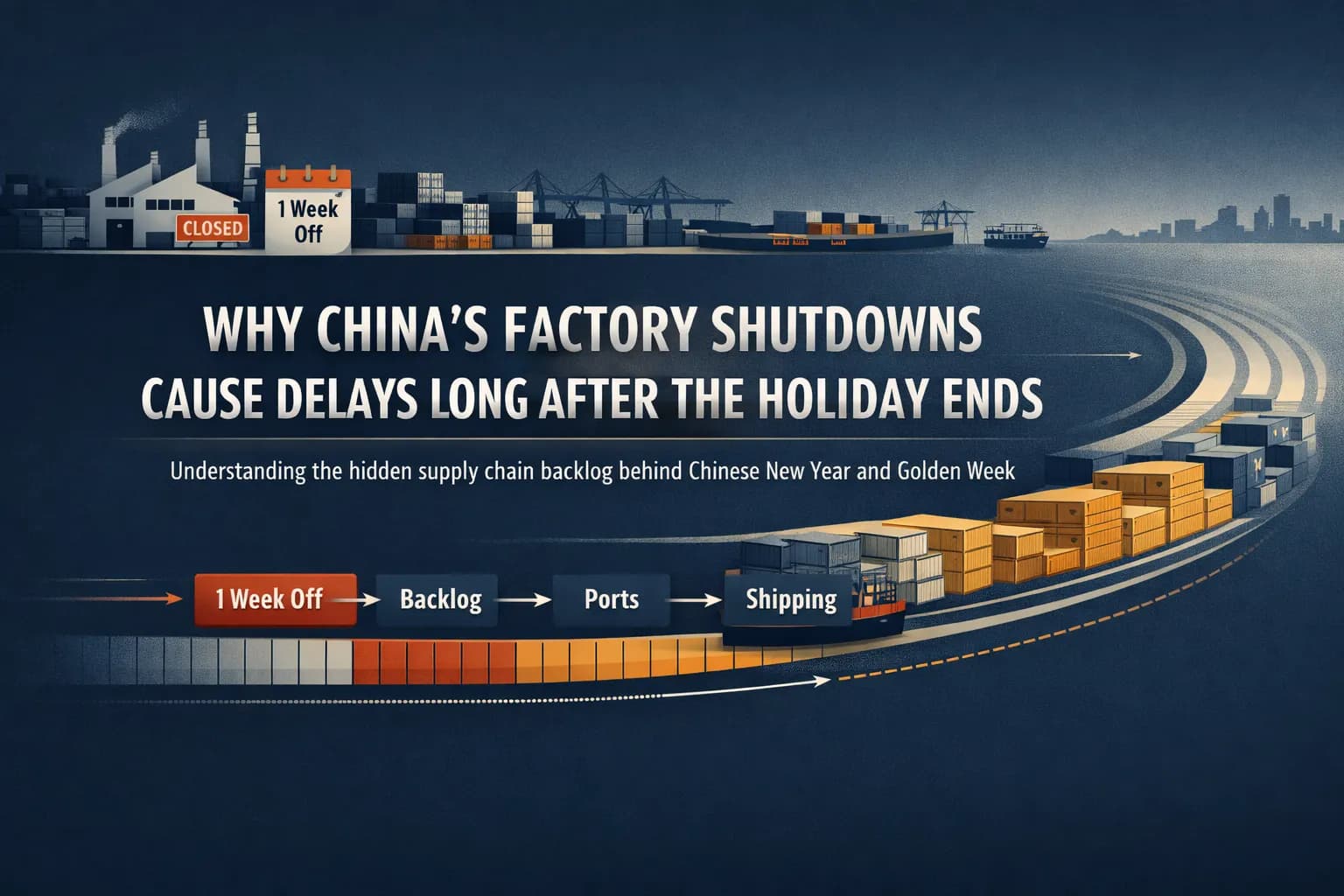
In practice, businesses often experience 4–8 weeks of cumulative disruption, even though the official holiday lasts only about a week.
Impact on Philippine Businesses Importing From China
For Philippine importers, distributors, and retailers sourcing from Chinese manufacturers, these disruptions have concrete downstream effects.
Inventory Shortages
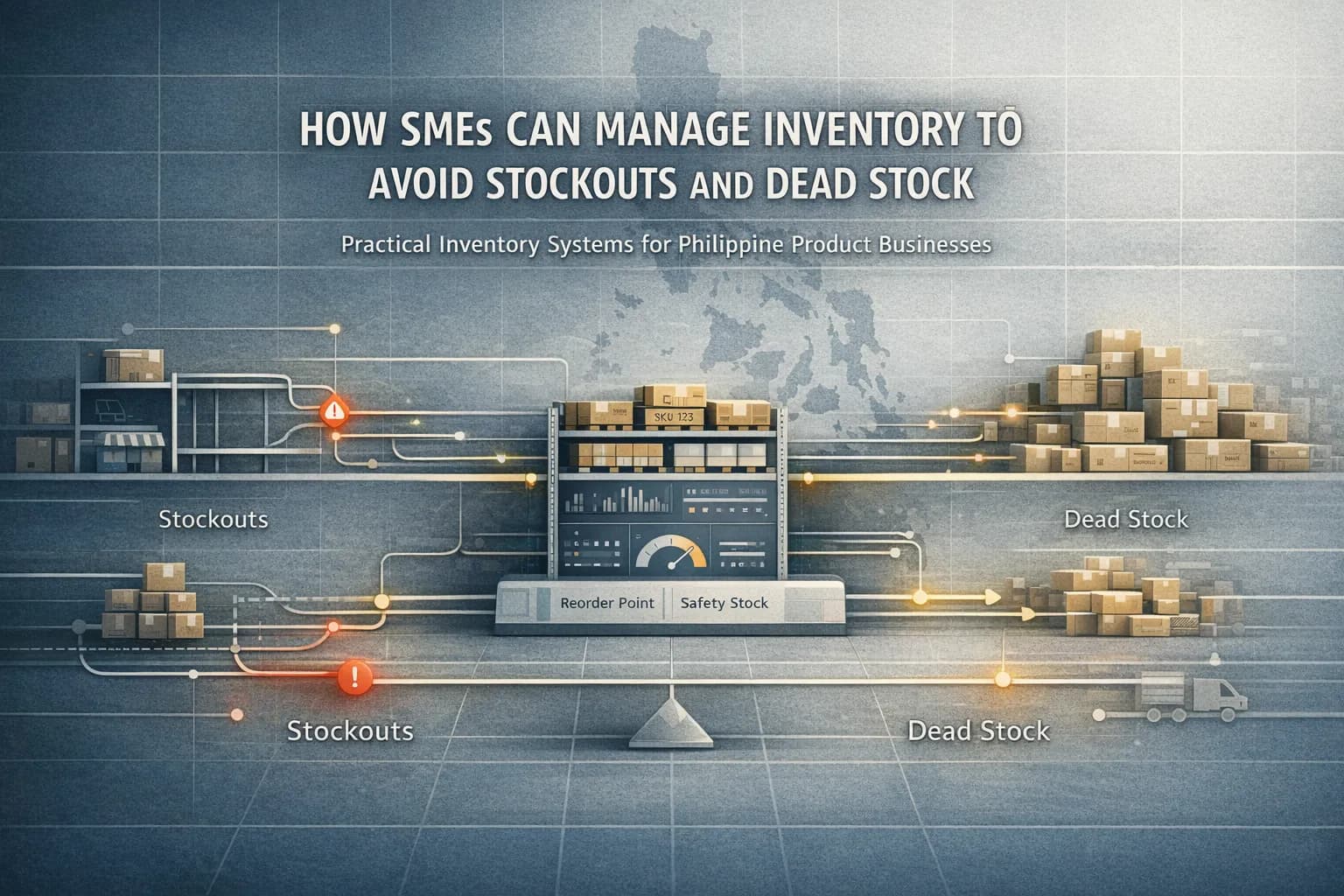
Businesses that underestimate shutdown periods often face stockouts lasting several weeks, particularly during the first quarter of the year when Chinese New Year falls. For retailers and distributors, that gap can mean lost sales, lower platform rankings, and unhappy customers. Our guide on managing inventory to avoid stockouts and dead stock covers the operational frameworks that help prevent these gaps.
Delayed Product Launches
Product launches tied to marketing campaigns, seasonal demand, or promotional calendars may slip if manufacturing timelines shift. A two-week production delay can easily become a four-week go-to-market delay once shipping and customs clearance are factored in.
Pricing Volatility
Supply constraints during and after shutdowns can lead to temporary increases in manufacturing costs or freight rates, squeezing margins for importers who did not lock in pricing earlier.
Increased Supply Chain Risk
Companies that rely on a single factory, a single shipping route, or tight inventory buffers are particularly exposed during shutdown periods. One missed production slot or one delayed vessel can cascade into weeks of downstream problems.
How Businesses Can Prepare
The good news is that these disruptions are entirely predictable. Experienced importers build their annual procurement calendar around China's manufacturing cycle—not the other way around.
Place Orders Earlier Than Usual
Many companies place Chinese New Year orders two to three months in advance to secure production slots before factories fill their pre-holiday queues. The earlier you commit, the better your position in the production schedule.
Build Buffer Inventory
Maintaining safety stock before major shutdown periods is one of the most effective ways to prevent inventory gaps. This requires planning procurement cycles so that inventory levels peak just before the shutdown begins. Structured demand forecasting makes it possible to calculate how much buffer stock you actually need rather than guessing.
Forecast Production Timelines Realistically
Supply chain planning should explicitly account for:
- Factory shutdown windows
- Production ramp-up delays
- Shipping congestion periods
Ignoring these variables does not make them go away. It just turns predictable delays into preventable crises. For businesses scaling beyond founder-led operations, building these planning rhythms into the operating cadence is essential.
Work With Reliable Suppliers
Long-term supplier relationships often improve production priority and communication during high-demand periods. Suppliers who know your business and value the relationship are more likely to protect your production slot—and more likely to communicate honestly when delays arise.
Diversify Where Possible
For businesses with the operational capacity, maintaining relationships with multiple suppliers or factories reduces concentration risk. If one supplier is delayed, having an alternative source can keep inventory flowing.
Strategic Takeaway
China's holiday shutdowns are some of the most predictable disruptions in global supply chains. The dates are known years in advance. The patterns repeat every year. And yet, businesses routinely underestimate the cumulative impact.
The key insight is this: the real disruption is not the holiday itself. It is the production backlog and logistics congestion that build before and after the shutdown. A one-week official holiday does not cause one week of delay. It causes a month or two of cascading slowdowns across manufacturing, shipping, and fulfillment.
For Philippine businesses that import from China—whether finished goods, components, or raw materials—the implication is clear: procurement planning must account for these cycles as structural features of the supply chain, not as surprises.
Companies that plan around the calendar, build inventory buffers, maintain strong supplier relationships, and diversify where practical can turn what others experience as a crisis into a competitive advantage. Luxium's procurement services help businesses build supplier relationships and procurement calendars that account for these seasonal disruptions.
In global sourcing, timing is not a minor detail. It is strategy.